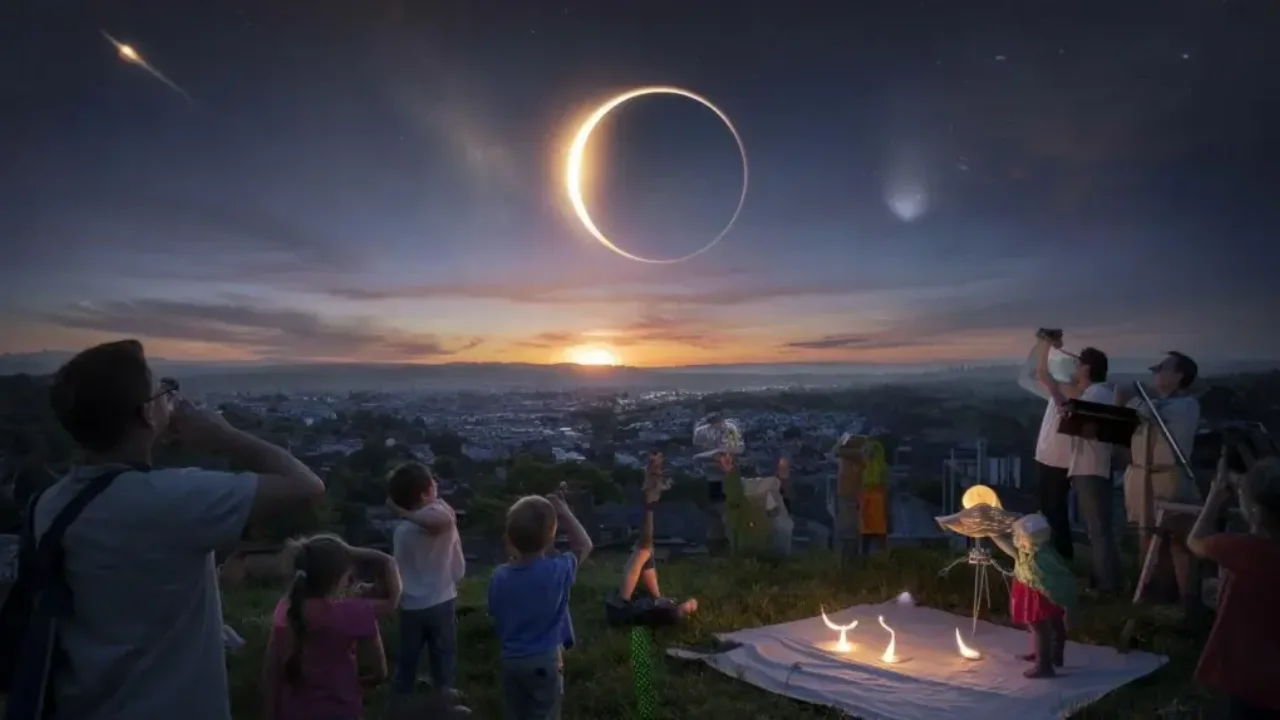
Eclipse of the Century is already being called one of the most extraordinary sky events of our time. On August 2, 2027, millions of people will look up and witness something that feels almost unreal. For more than six minutes, daylight will fade into deep twilight as the Moon completely covers the Sun. The excitement around the Eclipse of the Century is growing because events of this length are rare and unforgettable.
If you are searching for the exact date, the best viewing locations, and why this total solar eclipse will last so long, you are in the right place. This guide explains the science behind it, maps the path across continents, and helps you plan the perfect viewing experience. Whether you are a space enthusiast or simply curious about this once in a lifetime event, this article answers everything in clear and simple terms.
Eclipse of the Century
The Eclipse of the Century on August 2, 2027 will be the longest total solar eclipse visible from land between 1991 and 2114. At its peak, totality will last up to 6 minutes and 23 seconds, which is far longer than the usual two to three minutes seen in most total eclipses. This rare duration happens because Earth will be near aphelion, making the Sun appear slightly smaller, while the Moon will be near perigee, appearing larger in the sky. The eclipse path will also pass close to the equator, where the Moon’s shadow moves more slowly across Earth’s surface. These combined factors create an extended period of darkness, offering an unmatched opportunity for observation, photography, and scientific study.
Overview Table
| Key Detail | Information |
| Event Name | Eclipse of the Century |
| Date | August 2, 2027 |
| Type of Eclipse | Total Solar Eclipse |
| Maximum Totality Duration | 6 minutes 23 seconds |
| Longest From Land Between | 1991 and 2114 |
| Path Width | Around 258 kilometers |
| Starting Point | Atlantic Ocean |
| Ending Point | Indian Ocean near Chagos Archipelago |
| Major Regions Covered | Europe, North Africa, Middle East |
| Best Viewing Conditions | Libya and Egypt with clear August skies |
Unveiling the longest eclipse of the decade
Most total solar eclipses give viewers only a short window of full darkness. Typically, totality lasts less than three minutes. That brief period often feels rushed, especially for first time viewers.
The Eclipse of the Century breaks that pattern. With more than six minutes of totality at certain points along the central path, it offers double the average viewing time. That extra duration makes a significant difference. You will have more time to observe the solar corona, notice changes in temperature, and experience the unusual calm that settles over the environment.
Astronomy experts consider this the longest total solar eclipse visible from land in over a century. For researchers, it provides an extended opportunity to study the Sun’s outer atmosphere. For travelers and photographers, it creates the perfect conditions for capturing rare celestial images.

This is why searches for terms like total solar eclipse 2027 path map, longest solar eclipse 2027, and best place to see solar eclipse 2027 are already trending online.
The merger of rare astronomical alignments
The long duration of the Eclipse of the Century is not random. It happens because of a precise alignment of celestial movements.
First, Earth will be near aphelion on August 2, 2027. Aphelion is the point in Earth’s orbit when it is farthest from the Sun. When this happens, the Sun appears slightly smaller in the sky.
At the same time, the Moon will be near perigee, which is the closest point to Earth in its orbit. A closer Moon looks larger from our perspective. When a larger Moon passes in front of a slightly smaller Sun, it covers it more completely and for a longer time.
There is another key detail. The eclipse path runs close to the equator. Near equatorial regions, the Moon’s shadow travels more slowly across the surface of Earth. A slower moving shadow means longer totality for those standing directly in its path.
These three factors together create the extended darkness that defines the Eclipse of the Century.

A journey across continents: Where to witness the eclipse
The path of totality will begin over the Atlantic Ocean and move eastward. As it travels, it will cross multiple countries across three major regions.
Countries in the direct path include:
- Spain
- Morocco
- Algeria
- Tunisia
- Libya
- Egypt
- Sudan
- Saudi Arabia
- Yemen
- Somalia
The eclipse will then exit over the Indian Ocean, passing near the Chagos Archipelago.
If you want the longest possible totality, you should aim for locations near the center of the path. Northern Africa stands out as a strong choice. Libya and Egypt are often highlighted because August weather in these regions is typically dry with minimal cloud cover.
Spain is expected to attract thousands of visitors as well, especially along its southern coast. Travel agencies are already preparing eclipse tour packages, and hotels in prime locations may fill quickly as the date approaches.
For anyone serious about witnessing the Eclipse of the Century, early planning will be essential.

Why this eclipse matters so much
Total solar eclipses happen somewhere on Earth every one to two years. However, any specific location might wait decades before experiencing one.
What makes the Eclipse of the Century special is the combination of its length, visibility across populated regions, and ideal viewing conditions in desert areas. Six minutes of darkness allows enough time to truly absorb the experience instead of rushing through it.
During totality, the sky will darken dramatically. Stars and planets may become visible. Birds may grow quiet. The temperature can drop slightly. The Sun’s corona will shine as a glowing halo around the dark Moon.
For scientists, the longer window means better opportunities to study solar activity and atmospheric effects. For the rest of us, it is a reminder of how small we are in the vast scale of the universe.
What to expect on August 2, 2027
Here is how the event will unfold:
- The Moon will slowly begin covering the Sun.
- Daylight will gradually fade.
- A deep twilight will take over the sky.
- Total darkness will last up to six minutes in some areas.
- The Sun’s corona will become fully visible.
- Light will slowly return as the Moon moves away.
Proper eye protection is critical. You must use certified solar viewing glasses during all partial phases. Only during totality is it safe to look without protection, and only if the Sun is completely covered.

As interest in the Eclipse of the Century grows, experts recommend following official astronomical updates and local weather forecasts in 2027.
FAQs
1. When will the Eclipse of the Century take place?
It will occur on August 2, 2027.
2. How long will total darkness last?
Maximum totality will reach about 6 minutes and 23 seconds in the central path.
3. Which region offers the best viewing conditions?
Libya and Egypt are expected to have clear and dry skies in August, making them strong viewing options.
4. Why is this eclipse longer than most others?
It is due to Earth being near aphelion, the Moon being near perigee, and the shadow moving slowly near the equator.
5. Is it safe to watch without glasses?
You must use certified solar glasses during partial phases. Direct viewing without protection is safe only during full totality.